

 By Alisha King
6 min read •
Key Fob Buyback Program: How Businesses Turn Surplus Key Fobs Into Cash
Across the automotive industry, businesses quietly accumulate unused and surplus key fobs. Over time, these fobs end up sitting in drawers, bins, or storage rooms—often written off as obsolete or discarded as electronic waste.
What many organizations don’t realize is that OEM key fobs are recoverable assets, and a structured key fob buyback program allows businesses to convert those unused items into real cash.
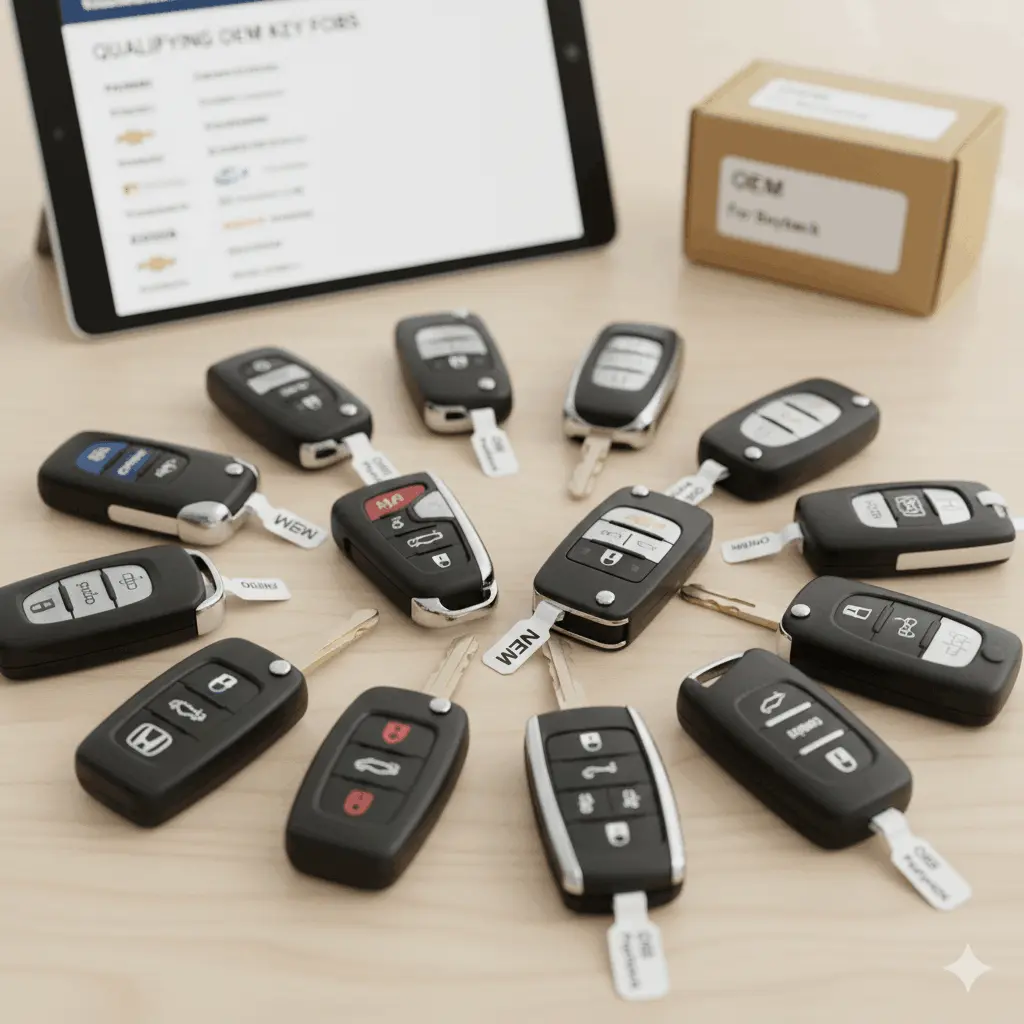
This article explains:
- What a key fob buyback program is
- Which businesses benefit most
- What types of key fobs qualify
- How buyback programs work
- Why companies choose buyback programs over scrapping
What Is a Key Fob Buyback Program?
A key fob buyback program is a structured process where a specialized buyer purchases used or surplus OEM key fobs in bulk from businesses. Unlike consumer resale or single-item transactions, buyback programs are designed for volume, simplicity, security, and operational efficiency.
These programs are commonly used as part of asset recovery initiatives, fleet decommissioning, and corporate sustainability efforts.
Which Businesses Use Key Fob Buyback Programs?
Key fob buyback programs are primarily used by automotive-related businesses that handle vehicles at scale, including:
- New and used car dealerships
- Car rental companies
- Fleet management companies
- Auto auctions
- Automotive recyclers
- Insurance and recovery operations
Where Do Surplus Key Fobs Come From?
Surplus key fobs are a natural byproduct of normal operations. Common sources include vehicle trade-ins, fleet units being retired, auction vehicles, and legacy inventory from older models. Most of these fobs are no longer needed operationally—but they still hold value.
What Types of Key Fobs Qualify for a Buyback Program?
Professional key fob buyback programs focus on OEM (Original Equipment Manufacturer) key fobs. Commonly accepted types include smart proximity keys, push-to-start fobs, flip keys, and remote head keys from brands like Ford, Chevrolet, Toyota, Nissan, and Honda.
Note: Previously programmed key fobs are often eligible and do not need to be reset before submission.
Why Businesses Choose a Key Fob Buyback Program
1. Asset Recovery Instead of Disposal
Buyback programs treat unused key fobs as recoverable inventory, not waste. Turning this surplus into revenue helps the bottom line.
2. Simple, Bulk-Friendly Process
Most programs require no testing, no programming, and no individual listings, aligning with professional procurement standards.
3. Secure and Compliant Handling
Reputable partners like We Buy Key Fobs ensure VIN data is irrelevant and no customer data is retained.
4. Sustainability Benefits
Refurbishing and reusing OEM electronics reduces e-waste and supports environmentally responsible operations.
How a Key Fob Buyback Program Works
Understanding how it works is simple for business operations:
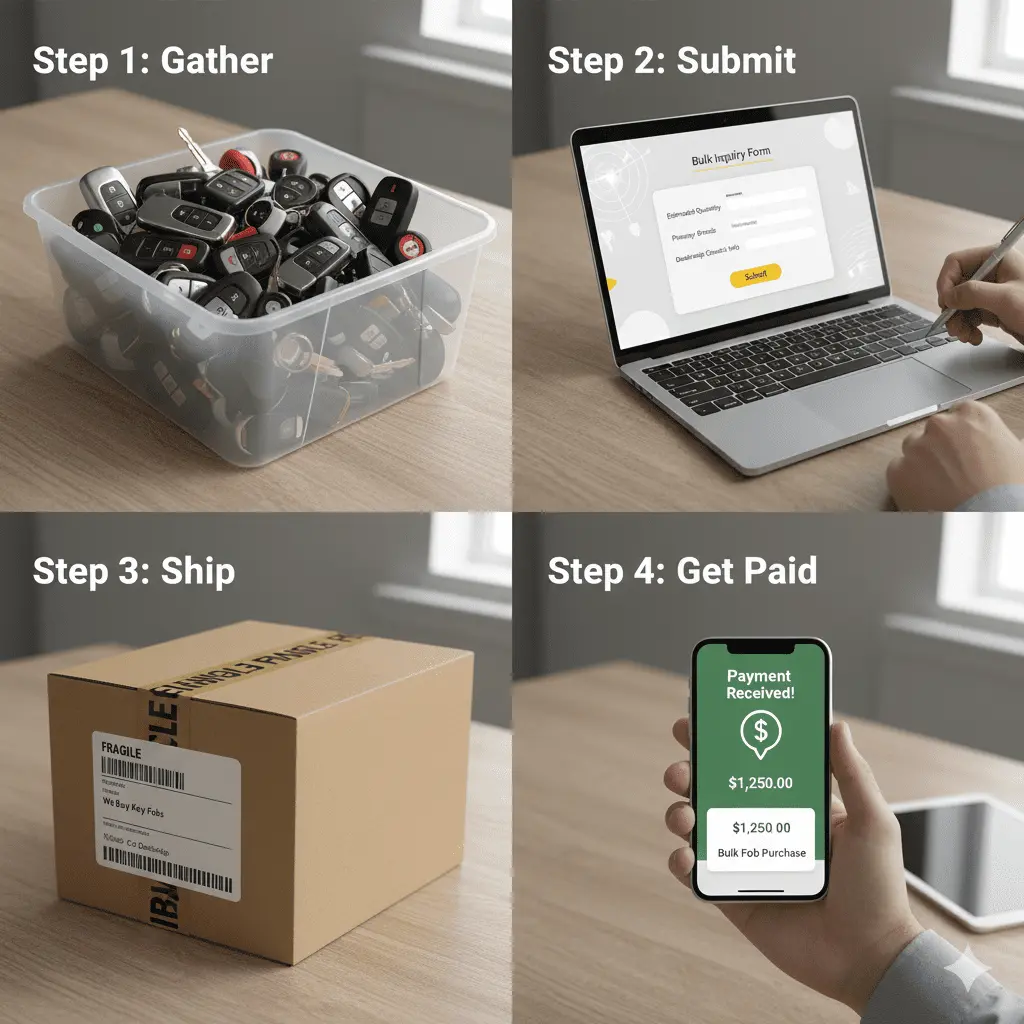
Step 1: Aggregate Surplus Key Fobs
Collect unused or retired key fobs in bulk. Mixed brands and conditions are typically acceptable.
Step 2: Submit a Buyback Inquiry
Provide your estimated quantity, general OEM mix, and business contact information.
Step 3: Ship or Coordinate Logistics
Buyback partners provide clear shipping instructions and handle the inspection once the package arrives.
Step 4: Get Paid
Payment is issued quickly after count verification and processing.
How Much Do Key Fobs Pay?
Pricing depends on brand mix, quantity, and market demand. Typical buyback ranges include:
- Lower-demand OEM fobs: $2–$5 each
- Common smart keys: $6–$15 each
- High-demand proximity keys: $15–$40+ each
Key Fob Buyback Program FAQs
Is a key fob buyback program legal?
Yes. Used key fobs are legal electronic components for refurbishing purposes.
Do key fobs need to be erased or reset?
No. Buyback partners handle all necessary technical refurbishment or recycling.
Is customer data at risk?
No. VINs and customer data are not required or retained during the process.
Can damaged key fobs be included?
Often yes. Condition may impact value, but rarely eligibility for OEM units.